- Kaspa uses GHOSTDAG technology to deliver faster transactions while maintaining proof-of-work security and decentralization.
- Celestia provides modular data availability infrastructure that could support growing Ethereum layer-2 adoption.
- Arbitrum combines strong Ethereum ecosystem adoption with potential token value growth through staking and fee-sharing.
The search for altcoins with massive growth potential continues. Some projects offer technology that could reshape blockchain infrastructure. Others focus on solving problems that limit wider adoption. Kaspa, Celestia, and Arbitrum deserve attention for different reasons. Each project targets a major sector of the crypto market. Their technology, ecosystems, and future developments could support substantial growth. However, investors should understand the risks before chasing potential 100x returns.
Kaspa (KAS)

Kaspa stands out through a different approach to proof-of-work technology. The network uses GHOSTDAG to process blocks quickly and maintain security. Unlike traditional blockchains, Kaspa allows multiple blocks to coexist. This structure helps improve transaction speed without sacrificing decentralization. The design also preserves the principles that made Bitcoin attractive to early adopters. Kaspa also benefits from a predictable emission schedule and dedicated mining community. These factors strengthen the project’s long-term appeal. Its focus on speed, security, and decentralization gives KAS a clear market identity. As demand for efficient payment networks grows, Kaspa could attract more users. Greater adoption could eventually support significant price appreciation. However, competition from other payment-focused blockchains remains a major challenge.
Celestia (TIA)
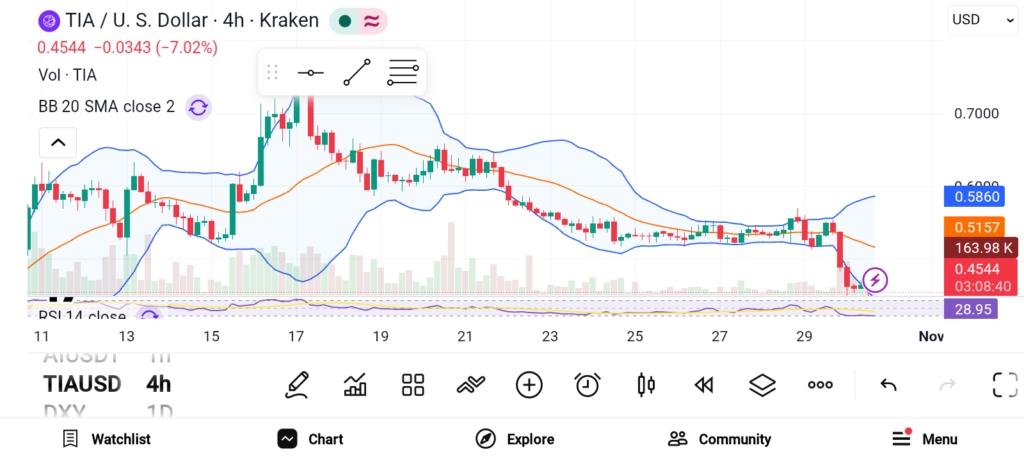
Celestia targets another important challenge facing blockchain networks: scalability. Rather than processing every transaction, the network focuses on data availability. This approach allows other blockchains to handle execution independently. Developers can use Celestia as infrastructure when building scalable blockchain networks. The modular blockchain model could become increasingly important. Ethereum continues supporting more layer-2 networks and specialized applications. These networks need reliable ways to publish and access transaction data. Celestia offers infrastructure designed specifically for that purpose. Growing demand could strengthen TIA’s position within the modular ecosystem. However, Celestia must compete with alternative data availability providers. Its long-term success depends on adoption, network usage, and token demand. If developers continue choosing modular infrastructure.

Arbitrum (ARB)

Arbitrum remains a major player in Ethereum’s layer-2 ecosystem. The network helps reduce transaction costs and improve processing speeds. Its established DeFi ecosystem attracts developers, users, and substantial liquidity. Despite that influence, ARB still faces questions about token value capture. A potential shift could change the investment outlook. Introducing meaningful staking and fee-sharing mechanisms could strengthen ARB’s utility. Such developments might give holders additional reasons to retain their tokens. However, governance decisions and competition from other layer-2 networks matter. Arbitrum needs stronger connections between ecosystem growth and token demand.
Kaspa, Celestia, and Arbitrum offer three different growth opportunities. KAS focuses on faster proof-of-work transactions and decentralization. TIA targets blockchain scalability through modular data availability. ARB could benefit from stronger token utility and Ethereum adoption. Although 100x returns remain speculative, these projects deserve careful research.