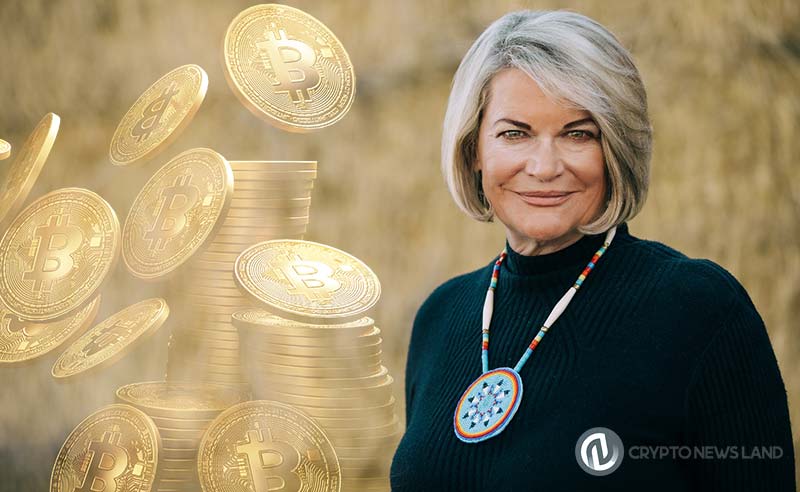
- Senator Lummis pushes for a U.S. Bitcoin reserve to enhance financial stability.
- Lummis seeks bipartisan support to acquire 1 million Bitcoin over five years.
- States like Utah are pioneering Bitcoin reserve legislation amid federal debate
Senator Cynthia Lummis has confirmed her efforts to pass legislation for the U.S. Bitcoin reserve. In a recent discussion in Washington, she outlined the progress of the proposed bill. The bill seeks to acquire 1 million Bitcoin over 5 years, aiming to integrate Bitcoin into national and state reserves. Lummis emphasized that no new taxes would be needed, as existing financial assets from the Federal Reserve and Treasury would be used.
Bipartisan Support and Efforts to Advance the Bill
Lummis has been working to rally bipartisan support for the Bitcoin reserve bill. She mentioned that the legislation requires 60 votes to pass in the Senate. Lummis is engaging with both Republicans and Democrats to gather necessary support. She is also focused on forming a coalition of lawmakers to move the bill forward. While progress has been steady, she acknowledged the need for further efforts to secure enough votes.
According to Lummis, numerous lawmakers demonstrate growing concerns about the dollar’s continued stability. In her opinion, Bitcoin provides an inflation protection mechanism through its role as a hedge. By using Bitcoin, the U.S. could reinforce the dollar’s global financial standing and provide long-term security.

State-Level Initiatives Gaining Momentum
As federal efforts continue, state-level initiatives to create Bitcoin reserves are also gaining momentum. Several states have already introduced legislation to establish state-based Bitcoin reserves. These states include Utah, Ohio, Florida, and Montana. Dennis Porter, CEO of Satoshi Action Fund, mentioned that 15 states are currently involved in such initiatives. Many see Bitcoin as an essential asset for securing financial stability at the state level.
Lummis, who served as Wyoming’s state treasurer, believes that states may act faster than the federal government. She emphasized that states have a unique role as financial innovators.
States have more limited ability to print money and spend freely, making assets like Bitcoin a valuable tool for stability. Utah recently passed a resolution through its digital asset task force to establish a Bitcoin reserve, and Porter is optimistic the state could become the first to pass such a law.