

- The BNB Chain completed the Luban hardfork on April 27, designed to onboard new functionalities.
- BNB Chain recorded a sharp uptick in development activity.
- Large addresses started to purchase BNB tokens.
Considering the increasing hack tales and regulatory crackdowns, the Binance space encountered multiple challenges this year. Nonetheless, there were signals that things were easing for the leading platform.

BNB Chain saw an impressive increase in transaction fees, confirming a 7-day growth rate of over 6% (Token Terminal data). The uptick came from the surged network activity as the chain’s 24hr active users increased by approximately 5% within that time frame.
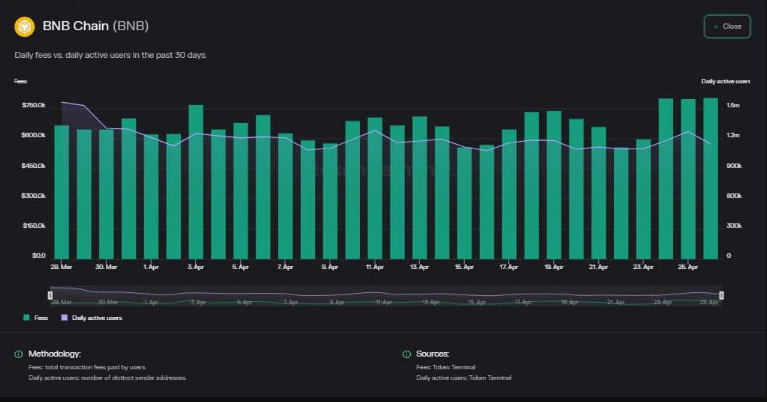
Source – Token Terminal
The latest action by BNB Chain to reduce transaction costs (by 40%) might have played a role in attracting market participants to the network. Nonetheless, there may have been more than meets the eye. Let’s dig further.
Another Crucial Upgrade
The BNB Chain undertook the Luban hardfork on April 27 – designed to introduce new functionalities and multiple enhancements. For instance, there’s the BEP-126 which brought a quicker finality mechanism. The modification would support block completion in two blocks, reducing the chances of chain reorganization.
Nevertheless, the fast finality function will be (fully) active after the Plato upgrade. BEP-174, another enhancement, will introduce a governance proposal to back relayer ‘whitelist’ management by onboarding Relayer Manager. Moreover, the BEP-221 will bring a new pre-compiled contract to authorize the CometBFT blocks.
Increased Whale Accumulation
While the Luban Upgrade remained on the testnet, market players trust the update would be on the mainnet soon, according to BNB’s increased activity. This metric confirms the project’s dedication to enhancing its products.
Meanwhile, large addresses responded to these updates and began accumulating BNB coins. The supply by leading wallets, which was dormant until April 22, confirmed an upsurge lately.
