

- XRP demonstrates strength, breaking resistance levels, while Cardano faces challenges.
- Centralization and decentralization influence their performance in the crypto market.
- Factors behind XRP’s resilience and Cardano’s struggles shed light on market dynamics.
XRP and Cardano have exhibited divergent performances in the crypto market. XRP, showing resilience, has overcome resistance levels, while Cardano encounters challenges.
XRP’s ability to navigate market hurdles and deliver positive results is evident in its recent performance. Breaking resistance levels and maintaining a strong position, XRP has captured attention amid volatility. On the other hand, Cardano faces headwinds and struggles to gain momentum.
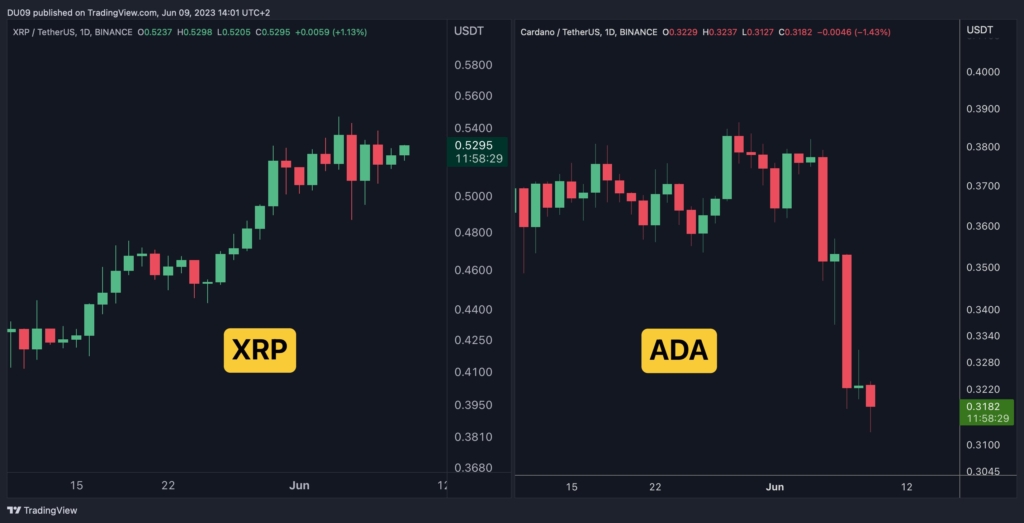
The contrasting performance raises questions about the influence of centralization and decentralization. XRP’s centralized nature has facilitated partnerships with traditional financial institutions, providing advantages in adoption and utility. This integration may contribute to its resilience. In contrast, Cardano’s decentralization presents complexities, impacting short-term performance.
Examining factors behind XRP’s resilience and Cardano’s struggles offers insights into market dynamics. Market sentiment, investor sentiment, regulatory developments, and technological advancements all play roles in their performance.

Understanding the interplay between centralization and decentralization is crucial in comprehending their divergent performances. By evaluating these factors, we gain a deeper understanding of the evolving crypto landscape.
In conclusion, XRP’s resilience and Cardano’s struggles demonstrate the impact of centralization and decentralization. Exploring the underlying factors contributes to a comprehensive understanding of market dynamics. By monitoring their performances, we gain valuable insights into the crypto market’s ever-changing landscape.
