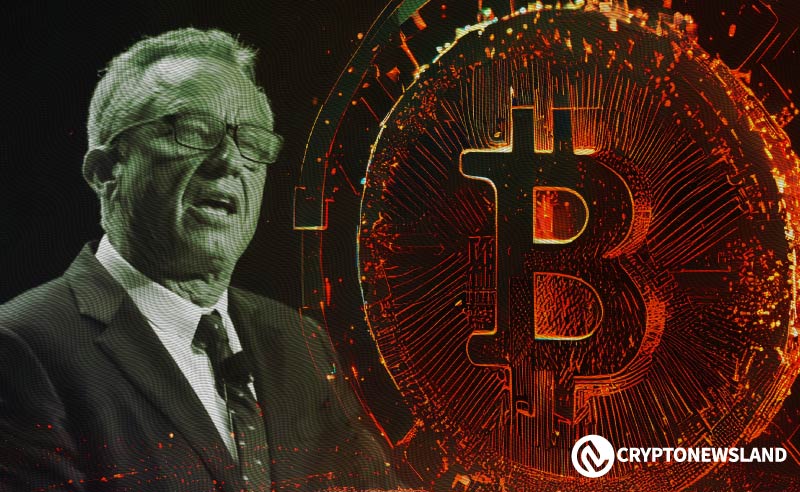
- Robert Kiyosaki endorses Bitcoin as a safeguard against fiat devaluation, calling it a more stable asset amid rising U.S. debt.
- Kiyosaki argues that fiat currency weakens under U.S. debt burdens, while Bitcoin’s fixed supply makes it a safer option against inflation.
- Highlighting Bitcoin’s decentralized nature, Kiyosaki views it as a shield against risks tied to traditional, government-controlled financial systems.
Renowned author Robert Kiyosaki, best known for his financial guidance in *Rich Dad Poor Dad*, is once again making waves in the investment world. In a recent post on the social platform X, Kiyosaki advocated for Bitcoin as a way to protect wealth amidst what he sees as a concerning economic climate.
Additionally, he referred to fiat currency as “fake money” and stressed that Bitcoin, with its finite supply, offers a more stable path for preserving assets.Kiyosaki’s statement comes as Bitcoin reached the $73,000 mark, pushing Bitcoin holders into profitable territory. This growth underscores Kiyosaki’s belief in Bitcoin’s ability to outperform traditional currencies during turbulent economic periods.
Also, He argues that fiat money is losing its purchasing power, driven by mounting U.S. debt and inflation pressures. The U.S. national debt, he noted, now grows by roughly $1 trillion every 90 days, adding financial strain to an already vulnerable economic system.
Kiyosaki Cautions Against Reliance on Fiat Money
For years, Kiyosaki has criticized fiat currency, describing it as a “giant Ponzi scheme.” He contends that fiat money lacks intrinsic value and relies solely on trust in what he considers mismanaged financial and political structures.
Furthermore, as the national debt continues to grow, Kiyosaki believes this dependency becomes even more precarious, eroding the dollar’s purchasing power over time. He remains skeptical about the dollar’s future viability, suggesting that unchecked government spending weakens its position. For Kiyosaki, Bitcoin presents an alternative free from these risks.
Unlike fiat, which can be produced endlessly, Bitcoin’s supply is limited to 21 million coins. This cap, he argues, positions Bitcoin as a secure hedge against inflation, especially as government debt continues to climb. He believes this characteristic makes Bitcoin a safer option, able to retain value even as traditional currencies face inflationary pressure.

Bitcoin as a Safe Haven in Economic Uncertainty
Aside from Bitcoin’s fixed supply, Kiyosaki favors it as an investment for its decentralized nature. He values this feature, viewing Bitcoin as an asset that operates independently from central banks and governments.
In addition, this autonomy, he believes, shields Bitcoin from the political and financial instability often associated with fiat. Kiyosaki considers this protection especially crucial now, as he sees traditional financial systems increasingly exposed to devaluation.
Moreover, in his recent post, Kiyosaki connected his confidence in Bitcoin’s resilience to Metcalfe’s Law, which posits that a network’s value increases as more people join it. This growing network of Bitcoin users, he says, strengthens the currency’s position, much like how global reliance on the U.S. dollar has bolstered its stability. Bitcoin, he suggests, gains legitimacy as its user base expands, enhancing its role as a viable wealth preservation tool.
Future Implications for Savers and Investors
In conclusion, while Kiyosaki acknowledges the risks associated with any asset, he believes Bitcoin’s potential outweighs those uncertainties. He emphasizes that for many, Bitcoin may feel just as risky as fiat currency. Yet he trusts that Bitcoin’s independence from traditional financial systems offers a safeguard against inflation and government debt burdens.
Ultimately, this independence, in his view, makes it an essential option for those seeking stability. As economic conditions remain uncertain, Kiyosaki’s advice to consider assets like Bitcoin, gold, and silver reflects a cautious approach to wealth preservation. He points to Bitcoin’s robust structure and growing user network as indicators of its resilience in challenging times.